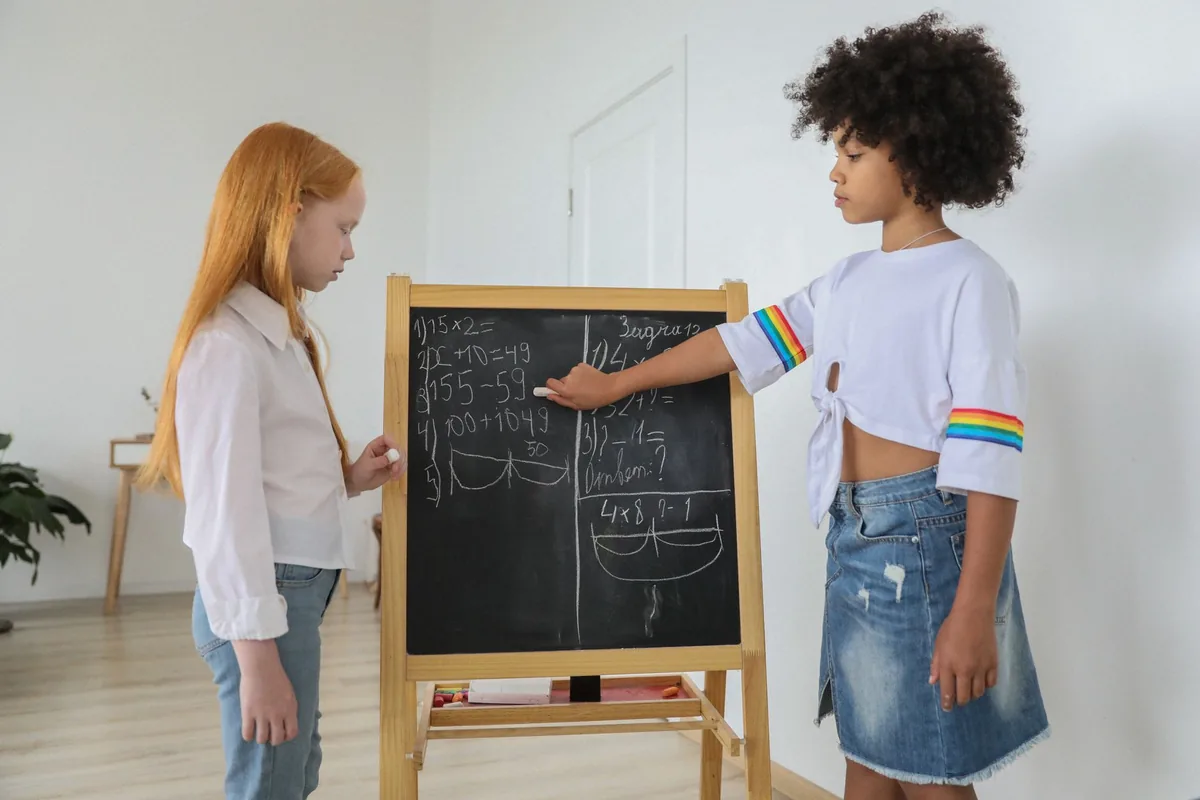
How to Build Math Confidence in Girls
The math gender gap is not about ability — research consistently shows that boys and girls perform equally well on math assessments through elementary school and beyond. The gap is about confidence. By 3rd grade, girls are significantly more likely than boys to say they are "not a math person," even when their grades are identical. This confidence gap has real consequences: it influences course selection, career aspirations, and willingness to persist through challenging problems. Closing it starts at home.
The roots of the confidence gap are cultural, not biological. Girls receive subtle messages from an early age — through media, peer interactions, and sometimes even well-meaning adults — that math is not "for them." These messages accumulate into a self-fulfilling prophecy: girls who believe they are not math people avoid math challenges, which prevents them from building the skills and confidence that come from struggling with and mastering difficult problems. Even everyday challenges like math word problems can become opportunities for growth when approached with the right mindset.
What Parents Can Do
The most impactful thing you can do is monitor your own language around math. Research shows that when mothers say "I was never good at math," their daughters' math performance drops — but their sons' performance is unaffected. This asymmetry reveals how powerfully gender-specific messaging operates. Instead of normalizing math avoidance, model math engagement: calculate tips out loud, measure ingredients carefully (a natural entry point for fractions), discuss how you use math in your work.
Praise effort and strategy rather than innate ability. "You worked really hard on that problem" is better than "you are so smart at math." The first message tells a girl that persistence pays off — that math ability is built through effort. The second message implies that math ability is a fixed trait, which means the first failure will feel like evidence that she is not actually smart — and this kind of fixed-mindset thinking can fuel test anxiety down the road. This distinction, rooted in growth mindset research, is especially important for girls because of the pre-existing cultural pressure to see math ability as something you either have or you do not.
🔧 Growth Mindset Activities
Interactive scenarios that help kids recognize and reframe fixed-mindset thinking — including the belief that some people are just not math people.
Try it free →Create Positive Math Experiences
Exposure to women who use math in their careers is powerful. Engineers, scientists, architects, data analysts, doctors, and entrepreneurs all use math daily. Even basic financial literacy relies on the math confidence built in these early years. When girls see real women doing real math in real careers, the cultural narrative that math is a male domain starts to break down. Books, videos, and conversations about women in STEM all help, but personal connections — a family friend who is an engineer, a teacher who shares her own math journey — are the most impactful.
Finally, do not rescue your daughter from struggle. When she is stuck on a math problem, the instinct to jump in and help is strong — especially if she is frustrated. But productive struggle is exactly where confidence is built. A girl who persists through a hard problem and solves it on her own gains something that no amount of praise or encouragement can provide: proof that she can do hard math. That proof, repeated over hundreds of problems across years of schooling, is what builds genuine, unshakeable math confidence.