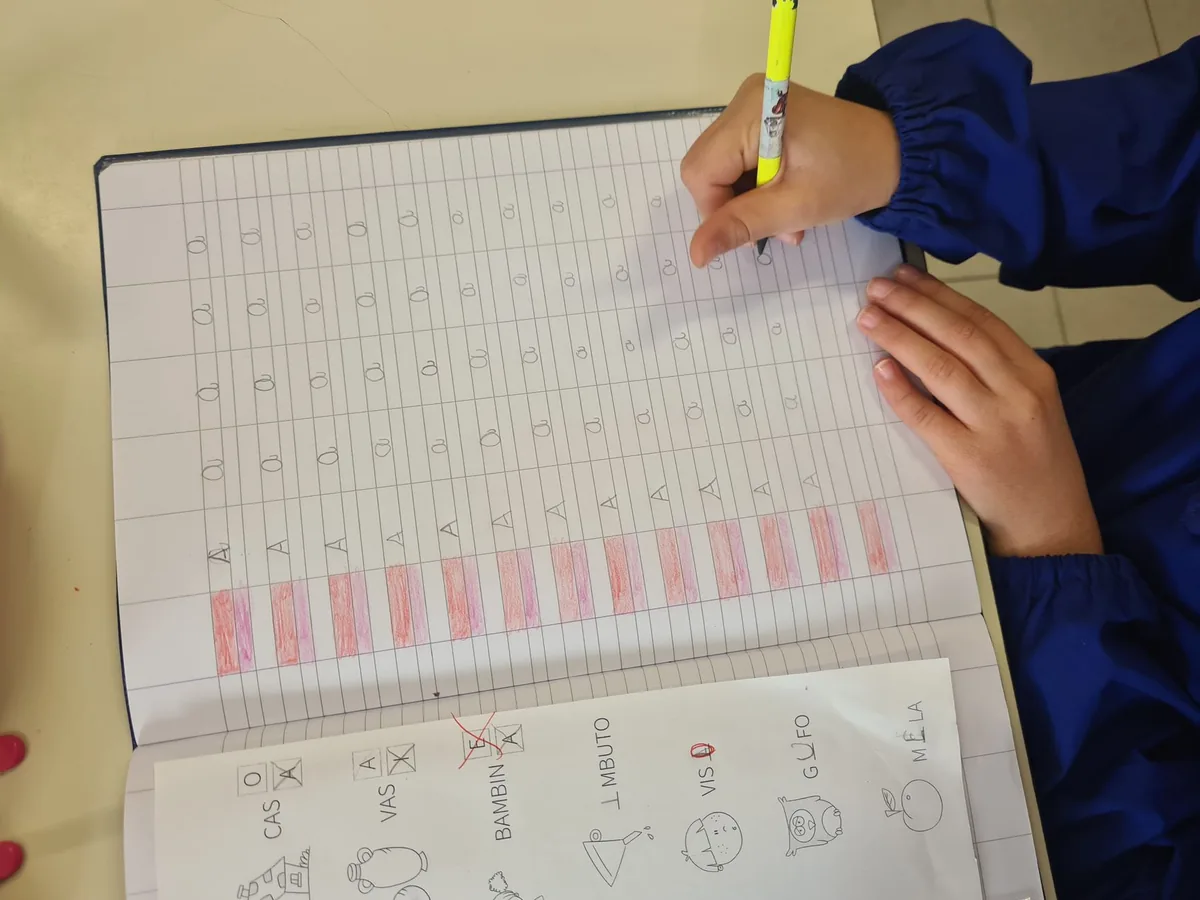
Best Ways to Practice Spelling at Home
Spelling practice has a reputation for being one of the most tedious parts of elementary school — memorize a list on Monday, take a test on Friday, forget half the words by the following Monday. This cycle persists because many families rely on rote memorization as their only spelling strategy. But research shows that effective spelling instruction goes beyond memorization to teach children the patterns, rules, and word structures that make English spelling logical rather than arbitrary. A solid phonics foundation is the starting point for all of it.
The good news is that English spelling, despite its reputation for inconsistency, actually follows patterns about 84% of the time. Words that seem to "break the rules" often follow different rules — patterns borrowed from French, Latin, Greek, or other languages that contributed to English. Teaching children to recognize these patterns gives them strategies that work across thousands of words, rather than requiring brute-force memorization of each one.
Pattern-Based Learning
Instead of studying random word lists, focus on word families and spelling patterns. Words that share a pattern — "light," "night," "fight," "sight" — are easier to learn together because the child is learning one pattern that applies to multiple words. Similarly, understanding rules like "i before e except after c" (with its many exceptions acknowledged) gives children a framework for making educated guesses when they encounter unfamiliar words.
Prefixes and suffixes are another powerful tool for spelling — and for building vocabulary. A child who knows how to spell "happy" and understands the rule for adding "-ness" can spell "happiness" without memorizing it separately. Understanding common endings like "-tion," "-ment," "-able," and "-ful" dramatically reduces the number of unique spelling patterns a child needs to learn.
🔧 Spelling Bee
Grade-level spelling practice with progressive hints and definitions. Kids hear the word, see it used in a sentence, and practice spelling it — building accuracy through context and repetition.
Try it free →Multi-Sensory Practice
The most effective spelling practice engages multiple senses. Look at the word (visual), say the word and its letters aloud (auditory), write the word by hand (kinesthetic), and trace the letters with a finger on a textured surface (tactile). This multi-sensory approach creates stronger memory traces than any single method alone — and it directly supports children's writing development. Children who struggle with traditional spelling lists often show dramatic improvement when they add physical movement and verbal repetition to their practice.
Games are natural spelling practice in disguise. Word searches, crossword puzzles, Scrabble, and Boggle all reinforce spelling patterns through enjoyable, low-pressure play. Even texting — when done with correct spelling rather than abbreviations — provides valuable practice because the child is writing words for a real communicative purpose.
🔧 Rhyme Match
Match rhyming word pairs at three difficulty levels. Rhyming strengthens the phonological awareness that supports both reading and spelling — kids learn spelling patterns through sound connections.
Try it free →The goal of spelling instruction is not perfection on Friday tests — it is the ability to communicate clearly in writing throughout life. Pair spelling practice with regular read-alouds to reinforce word patterns through exposure. When children understand the patterns and structures of English spelling, they develop the intuition to spell most words correctly and the strategies to figure out the ones they are unsure about. That is a far more valuable skill than memorizing any single word list.
- Bear, D. R. et al. "Words Their Way: Word Study for Phonics, Vocabulary, and Spelling Instruction." Pearson, 7th ed., 2020. Link →
- Ehri, L. C. "Learning to Read and Learning to Spell Are One and the Same, Almost." Learning to Spell, Lawrence Erlbaum, 1997.