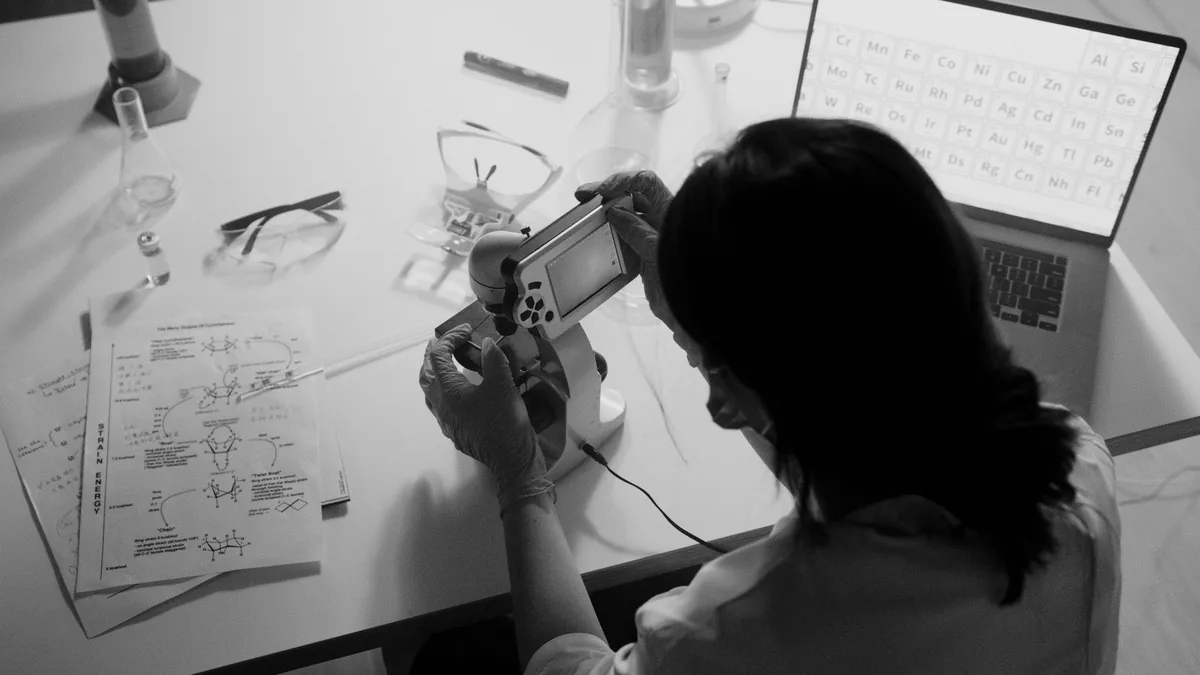
Teaching Kids About the Periodic Table
The periodic table looks intimidating — a grid of 118 elements with cryptic symbols and numbers that seems designed to overwhelm. But underneath that complexity is one of the most elegant and powerful organizational systems in all of science. Every material in the universe, from the water you drink to the stars in the sky, is made from the elements on this chart. When children understand what the periodic table actually represents, it transforms from a wall of confusion into a map of everything.
The key to teaching the periodic table to kids is to start with the concept rather than the details. You do not need to memorize all 118 elements to understand what the table means and why it matters.
Everything Is Made of Elements
Start with the most fundamental idea: everything around us is made from a relatively small number of building blocks called elements. Water is made of hydrogen and oxygen. The air we breathe is mostly nitrogen and oxygen. Our bodies are mostly carbon, hydrogen, oxygen, and nitrogen — a great connection to make when teaching kids about the human body. Gold is an element. Iron is an element. The silicon in computer chips is an element. Once children grasp that the entire physical world is built from these building blocks, the periodic table becomes a catalogue of ingredients rather than an abstract chart.
For younger children, focus on elements they encounter daily. Iron in their cereal and blood. Calcium in their bones and milk. Carbon in pencil lead and diamonds. Helium in balloons. Neon in signs. Connecting elements to real objects makes the abstract concrete and gives children hooks to remember them by.
🔧 Periodic Table Explorer
An interactive periodic table where kids click any element to learn about its properties, real-world uses, and fun facts. Includes sorting, filtering, and a quiz mode.
Try it free →Patterns and Organization
The genius of the periodic table is its organization. Elements are arranged by atomic number (the number of protons in their nucleus), and this arrangement creates columns of elements that share similar properties. The noble gases in the rightmost column are all unreactive. The alkali metals in the leftmost column are all highly reactive. This pattern means that if you understand the behavior of one element in a column, you can predict the behavior of the others.
For middle schoolers, the periodic table connects to atomic structure in fascinating ways. The number of electrons in an element's outer shell determines its chemical behavior — how it bonds with other elements, whether it is a metal or a nonmetal, and what compounds it forms. This connection between atomic structure and observable properties is one of the most powerful ideas in science — and it directly explains concepts like electrical conductivity, and the periodic table makes it visible.
The periodic table is also a history of human discovery. Elements were identified over centuries, from ancient knowledge of gold and iron (the same metals children encounter when studying fossils and geological time) to modern synthesis of elements that exist for fractions of a second in particle accelerators. Each element has a story — who discovered it, how, and what it is used for. These stories humanize chemistry and make the table feel like a record of human curiosity rather than just a reference chart. Exploring element properties also makes a fantastic science fair project.