Teaching Kids About Dinosaurs and Fossils
If there is one topic that reliably captivates children across ages, cultures, and generations, it is dinosaurs. The combination of enormous size, terrifying teeth, exotic names, and the mystery of extinction creates a fascination that no curriculum designer could manufacture. And hidden inside that fascination is an extraordinary opportunity for real science learning — paleontology, geology, biology, evolution, and the scientific method are all accessible through the lens of dinosaurs. Even chemistry and the periodic table connect — fossils are composed of minerals that replaced original bone.
The key for parents is to take the obsession seriously rather than treating it as a phase to outgrow. A child who can pronounce "Pachycephalosaurus" and explain what it ate is demonstrating vocabulary acquisition, classification skills, and information retention at a level that would impress any teacher. Channel that energy rather than redirecting it.
Beyond Memorizing Names
Most dinosaur-obsessed children start by memorizing names, sizes, and diets — and that is perfectly fine as an entry point. But the real learning begins when you push past identification into deeper questions. Why were some dinosaurs so much bigger than any land animal alive today? How do we know what they ate if we have never seen one alive? Why did some have feathers? How are birds related to dinosaurs? Each question opens a door into genuine scientific reasoning.
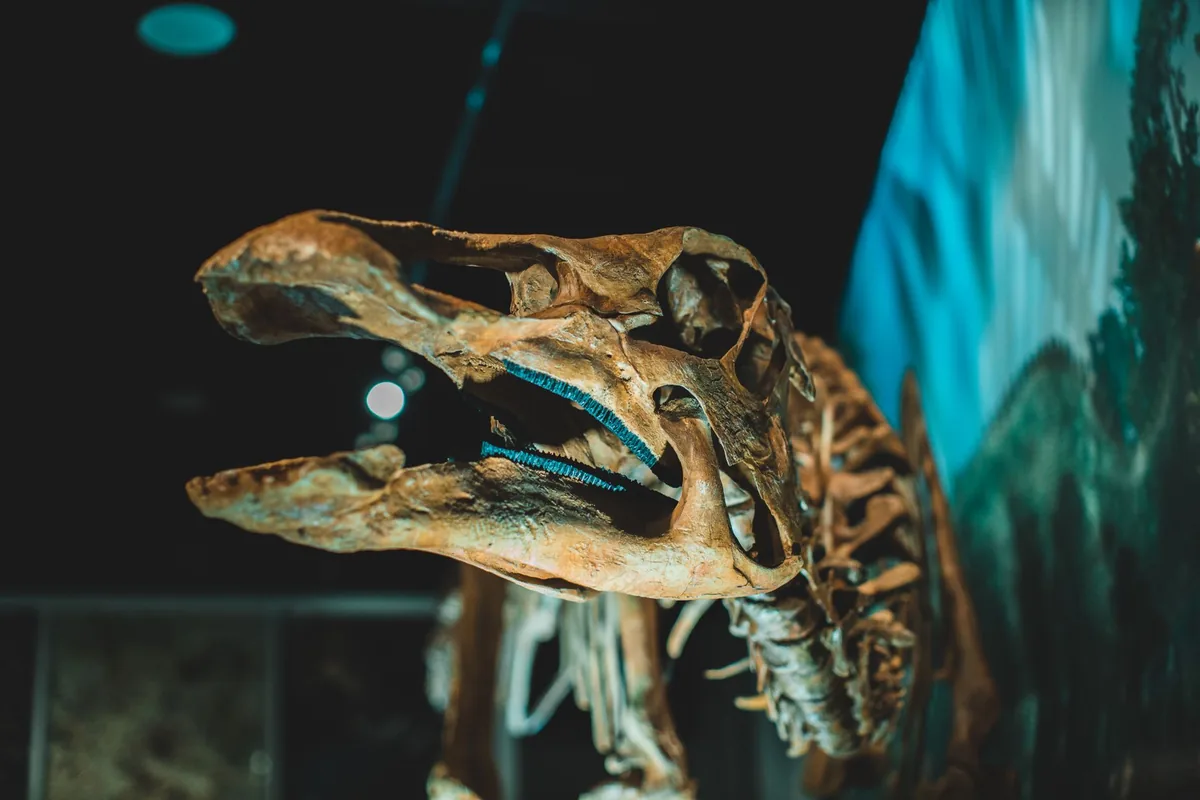
Fossils are particularly powerful teaching tools, especially when discovered during outdoor learning adventures because they introduce the concept of evidence-based reasoning. We have never seen a living dinosaur, but we can reconstruct their lives from bones, teeth, footprints, and even fossilized dung. When a child understands that scientists figured out what a T. rex ate by studying its tooth shape and comparing it to modern predators, they are learning how science constructs knowledge from evidence — the same process that drives every branch of science.
🔧 Dinosaur Explorer
Explore dozens of dinosaur species with facts about size, diet, habitat, and time period. Interactive comparison tools let kids see how different species relate to each other.
Try it free →Geological Time: The Big Picture
Dinosaurs lived during the Mesozoic Era, which lasted from about 252 million years ago to 66 million years ago. These numbers are incomprehensibly large for children — and for adults, honestly — but there are ways to make them tangible. The classic approach is to map Earth's history onto a single year: if January 1st is the formation of Earth, the first dinosaurs appear around December 13th, and humans show up at 11:59 PM on December 31st. This puts our entire history in perspective and shows children that Earth's story is vastly longer than humanity's chapter of it.
The extinction event that ended the age of dinosaurs 66 million years ago is endlessly fascinating for kids. The asteroid impact hypothesis — a space rock the size of a mountain striking the Yucatan Peninsula and triggering global devastation — including massive climate and weather changes — combines astronomy, geology, ecology, and drama in a way that no fiction could match. It also teaches an important lesson about the fragility of life on Earth and the power of catastrophic events to reshape the planet.
🔧 Rock Cycle Explorer
Understand how rocks form, change, and recycle over geological time. The same processes that create fossils are part of the rock cycle — connecting dinosaur science to earth science.
Try it free →The most valuable thing about dinosaur education is not the facts themselves but the scientific thinking it develops. A child who learns to ask "how do we know that?" about dinosaurs will eventually ask the same question about everything else — and that habit of demanding evidence is the foundation of scientific literacy — and it is exactly the thinking that makes a science fair project genuinely educational.