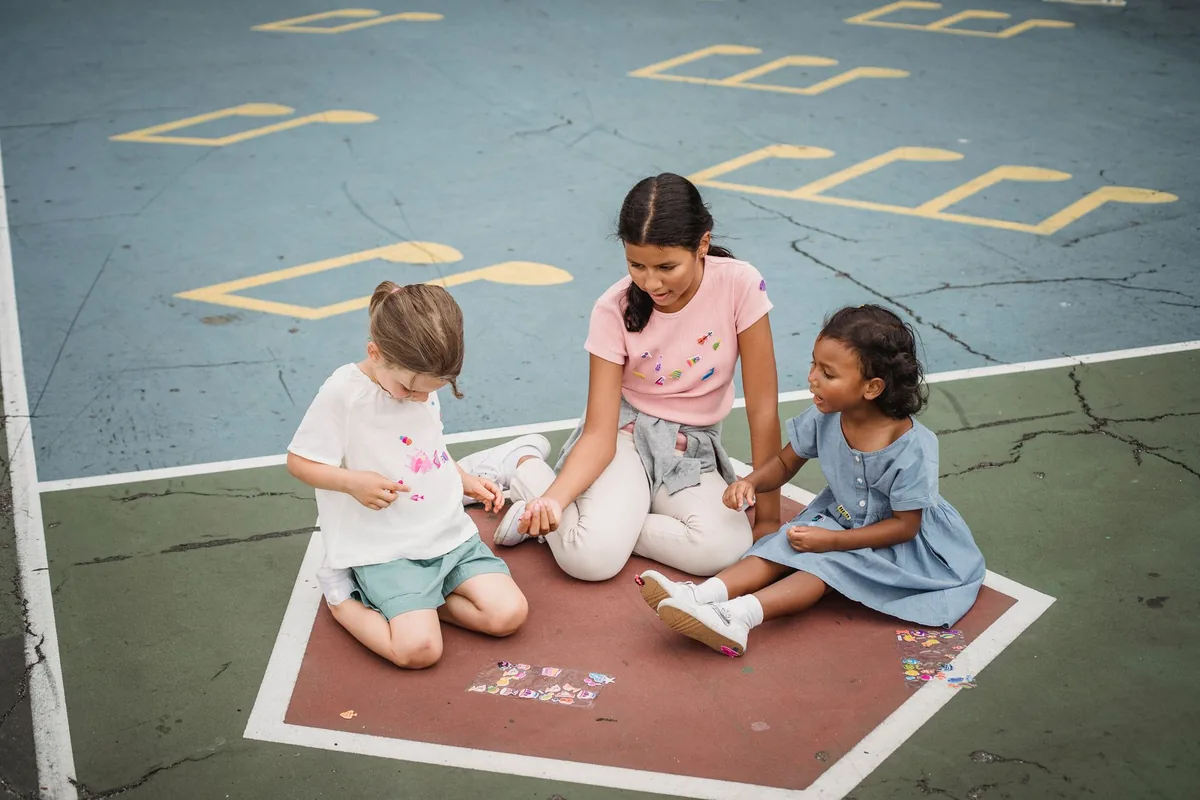
Pediatricians Just Updated Recess Guidance for the First Time in 13 Years
The American Academy of Pediatrics published new recess guidance on May 11, 2026, refreshing a policy statement that had not been updated since 2013. The headline is short and the message is sharp: schools should protect recess, and they should stop using it as a reward or a punishment.
The new statement, published in the journal Pediatrics, makes one structural change that we think matters most. It extends the recess recommendation beyond elementary school to all students, K through 12. That is a meaningful shift. For more than a decade, the policy stance was easy to read as “recess is for little kids.” The 2026 version treats unstructured breaks as a core part of how older children learn, too.
What the guidance actually says
The lead authors, including Dr. Robert Murray, frame recess as a deliberate pause in academic effort rather than as wasted time. Their argument leans on what the policy calls “wakeful rest” — the cognitive recovery that happens when kids stop concentrating on instruction and get a chance to move, talk, or simply not be told what to do for a few minutes. Both sedentary and active play count.
A few specifics from the new guidance worth knowing:
- The recommended floor is at least 20 minutes per day of recess, with multiple breaks ideally distributed across the school day.
- Recess should not be taken away for behavior, discipline, or to catch up on academic work — a practice the authors explicitly push back on.
- Self-directed play is emphasized as the format that builds the social and executive-function skills kids need to focus when they do return to class.
U.S. practice varies enormously today. Some schools offer less than 10 minutes; others offer more than an hour. The pediatricians’ group points to Japan and Denmark, where short breaks are built in after every 45 to 50 minutes of instruction.
Why this matters for the way we build SmartOnlineGames
This story lines up with how we think about screen-based learning generally. Our tools are designed to support a kid’s school day, not to absorb it. We do not run ads, we do not push notifications, and we do not gamify with manipulative streak mechanics. The point of an interactive tool, in our view, is that a child can use it for 8 minutes and then close the tab.
The new guidance also reinforces something teachers tell us constantly: students focus better after a real break than after a “quiet activity” that looks like more school. That has implications for how teachers might use our Daily Challenge or other short-form tools — as a focused warm-up, not as a fill-in for movement time.
For parents, the simplest move is to ask your child’s school how recess is scheduled. If it is being shortened or withheld for behavior, that is now squarely against current pediatric guidance. Our blog post on the benefits of outdoor learning covers related ground.