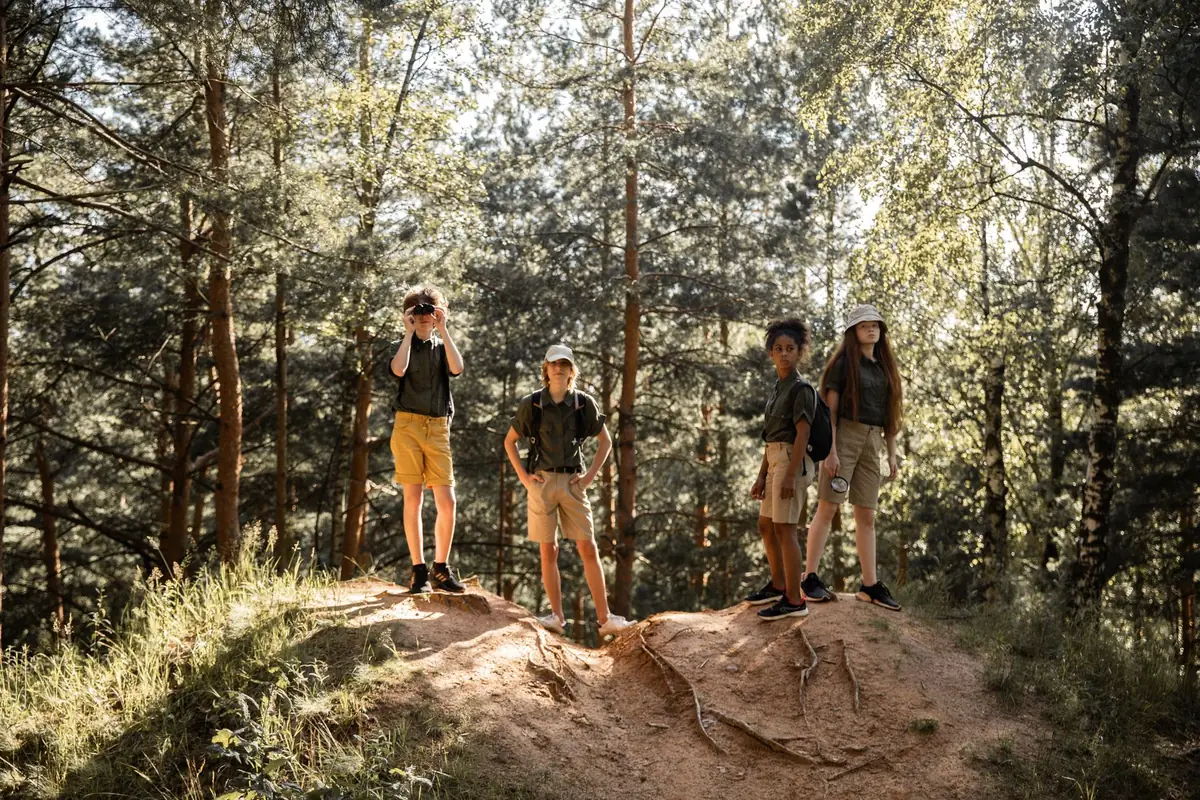
Benefits of Outdoor Learning for Kids
Something happens to children when they learn outside. Their attention sharpens. Their creativity expands. Their stress decreases. Their engagement increases. This is not wishful thinking — it is well-documented in research across education and developmental psychology. Outdoor learning environments consistently produce better outcomes than identical activities conducted indoors, and the benefits extend to academic performance, physical health, and emotional well-being.
The reasons are partly physiological. Natural light, fresh air, and physical movement all support cognitive function. But the benefits go deeper than biology. Outdoor environments are rich, varied, and unpredictable — they demand a different kind of attention than indoor spaces, and they offer sensory experiences that classrooms simply cannot replicate.
Nature as a Classroom
Every outdoor space is a learning environment waiting to be activated. A walk in the park becomes a biology lesson when you identify plants, insects, and birds. A trip to the beach becomes a geology lesson when you examine rocks and shells — maybe even fossils. A hike becomes a geography lesson when you read trail maps and observe changes in terrain and vegetation. The curriculum is already out there — you just need to ask the right questions.
Math opportunities are everywhere outdoors. Estimate the height of a tree by measuring its shadow. Count the petals on different flowers and discover that many follow Fibonacci numbers. Measure the circumference of tree trunks and compare growth rates. Calculate how far you have hiked using a map and scale. These activities feel like exploration rather than assignments, which is exactly why they are so effective.
🔧 National Parks Explorer
Discover America's national parks with interactive maps, facts, wildlife information, and geography connections. Great preparation for family trips or virtual exploration.
Try it free →Practical Ideas for Every Family
You do not need to live near a forest or a national park to benefit from outdoor learning. A backyard, a city park, or even a sidewalk offers opportunities. Start a nature journal where your child sketches plants, insects, or weather observations. Plant a garden and track growth over weeks. Set up a bird feeder and identify visitors. Collect leaves and classify them by shape, size, and edge type. Each of these activities builds observation, classification, and documentation skills — the foundations of scientific thinking and great preparation for science fair projects.
For academic subjects, simply moving the activity outside can improve engagement and retention. Reading under a tree. Practicing spelling with chalk on the sidewalk. Doing math problems on a whiteboard in the backyard. The content is the same, but the environment reduces stress and increases focus. Many parents discover that the child who resists twenty minutes of homework at the kitchen table happily does thirty minutes of the same work outside.
The most important benefit of outdoor learning may be the least measurable: it builds a relationship with the natural world — the kind of connection that supports environmental education. Children who spend time learning in nature develop environmental awareness, physical confidence, and a sense of wonder that enriches their lives far beyond any test score.